DSC PowerSeries Neo HS2032: Features, Expansion and Alarm.com
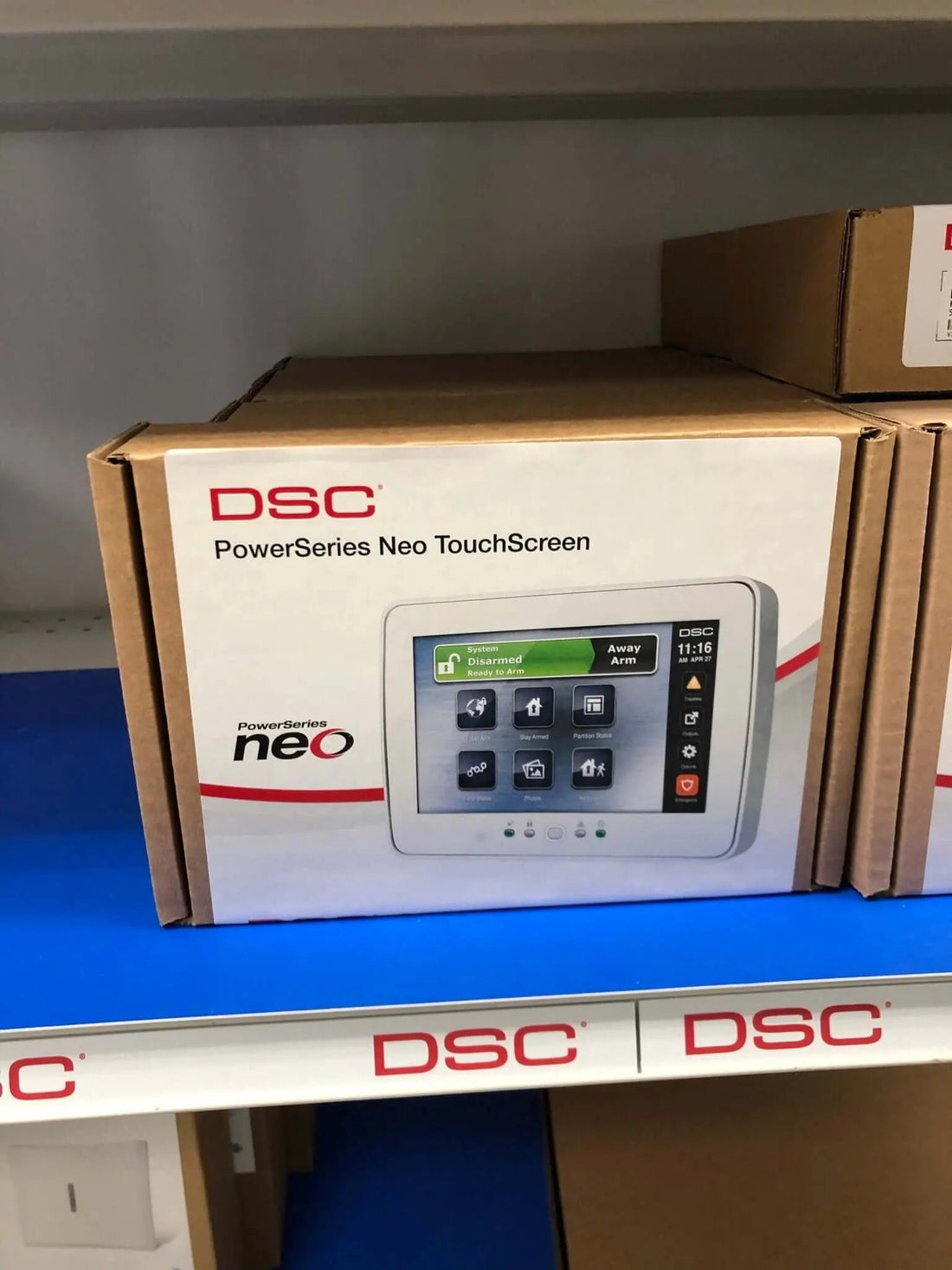
The DSC PowerSeries Neo HS2032 is a hybrid security control panel designed for residential and smaller commercial intrusion-detection systems. It supports dependable hardwired zones and can add compatible PowerG wireless devices when the required receiver and modules are included.
Avenger Security uses DSC Neo where a serviceable hardwired platform, encrypted wireless expansion and professional monitoring are appropriate. The final system design depends on the building, required zones, keypads, communication method and installed equipment.
What the HS2032 control panel does
The HS2032 is the control center for the alarm system. It processes zone activity, user commands, programmed outputs, trouble conditions and communication events. The panel can support up to 32 zones when configured with compatible expansion equipment.
A complete installed system normally includes more than the circuit board:
- A listed metal enclosure and correctly sized transformer.
- A standby battery selected for the connected load.
- One or more compatible DSC Neo keypads.
- Hardwired zone circuits and compatible detectors.
- PowerG wireless receiver capability when wireless devices are used.
- Sirens or other notification devices within the panel and power-supply ratings.
- A compatible LTE or dual-path communicator for professional monitoring.
Equipment should be sized as a system. Adding powered devices, expansion modules or sirens without reviewing current draw and standby requirements can create unreliable operation.
Hardwired and PowerG wireless devices
DSC Neo is a hybrid platform. Existing serviceable hardwired contacts, motions, glassbreaks and other compatible circuits may be reused after testing. PowerG wireless devices can be added when running new cable is impractical or when a compatible wireless device provides the best solution.
PowerG devices are not interchangeable with every DSC or third-party wireless product. Legacy wireless sensors and keypads should not be assumed compatible based on the brand name alone.
For a detailed migration checklist, read our guide to upgrading DSC PowerSeries to PowerSeries Neo.
Alarm.com compatibility
A DSC Neo system can support Alarm.com interactive services when the panel revision, communicator and account plan are compatible. The required Alarm.com cellular module connects to the panel and provides supported monitoring and interactive features.
Available features can include:
- Remote arming and disarming.
- Push, text or email notifications.
- User and access-code management.
- Opening, closing and selected trouble alerts.
- Supported automation and connected-device functions.
Compatibility should be verified using the exact control-panel version and communicator model before equipment is ordered. An Alarm.com subscription and professional monitoring service are separate from the purchase of the HS2032 hardware.
Visit our DSC Neo on Alarm.com page for current service and equipment information.
Zone capacity and expansion
The HS2032 can be expanded to support additional zones within its rated capacity. Expansion planning should account for:
- The number of hardwired and wireless zones.
- Required keypads and partitions.
- Auxiliary-power demand.
- Programmable outputs and relay interfaces.
- Siren or bell-circuit loading.
- Communicator and module compatibility.
- Standby battery calculations.
Leaving room in the enclosure and system design for likely future devices can reduce disruption later.
Professional monitoring and event reporting
A compatible communicator can transmit burglary, panic, trouble, opening, closing and other programmed events to a UL-listed central station. The exact reporting plan should match the customer’s needs and the installed devices.
Alarm.com app notifications do not replace professional central-station monitoring. The app provides supported remote controls and alerts; the central station processes configured alarm signals according to the account instructions.
Power, battery and communication supervision
The panel depends on stable AC power and a healthy standby battery. During service, the transformer, AC circuit, battery voltage, charging operation and system troubles should be checked.
An LTE or dual-path communicator must also be tested through the receiving central station. A communicator that appears powered is not proof that every programmed signal is being received correctly.
Smoke and carbon-monoxide devices
Compatible residential smoke and carbon-monoxide devices can be connected to an intrusion panel when the system design, listing and monitoring service allow it. Existing devices should be evaluated for model, age, condition and compatibility before reuse.
A DSC Neo intrusion system is not a substitute for a separately required commercial fire alarm system. Commercial and mixed-use occupancies require project-specific code and licensing review.
When the HS2032 is a good fit
The HS2032 is often appropriate when:
- The property already has useful hardwired alarm wiring.
- The customer wants a professional keypad-based system.
- Encrypted PowerG expansion is needed.
- Alarm.com interactive service is desired.
- The project fits within the panel’s zone and power capacity.
- Long-term serviceability is more important than a disposable all-in-one device.
A different panel may be appropriate when the project requires more zones, specialized commercial functions or a different wireless ecosystem.
Installation, takeover and support
Professional installation includes device testing, zone programming, user setup, power verification and central-station signal testing. Existing wiring and devices should be documented before an older panel is disconnected.
Avenger Security provides DSC Neo installation, existing-system upgrades and Alarm.com monitoring throughout Austin and Central Texas. Review our home security monitoring guide for pricing and service-policy information.