Commercial Fire Alarm Inspection & Testing | Texas

Austin & Central Texas • Commercial fire alarm inspection & testing

Know your system’s condition. Get clear inspection documentation.

Avenger Security provides commercial fire alarm inspection, testing and documentation for Austin and Central Texas properties. We review the applicable scope, test system functions and document results, deficiencies and recommended corrective work.

Inspection and testing are quoted services. Required scope and frequencies depend on the system, adopted requirements and Authority Having Jurisdiction.

Texas Fire Alarm RegistrationAvenger Security • ACR 2370373
System Testing & DocumentationDevice results, signal verification & applicable labeling
Deficiency Follow-UpDocumented findings and corrective-service options

Inspection services for your building

Device & system testing

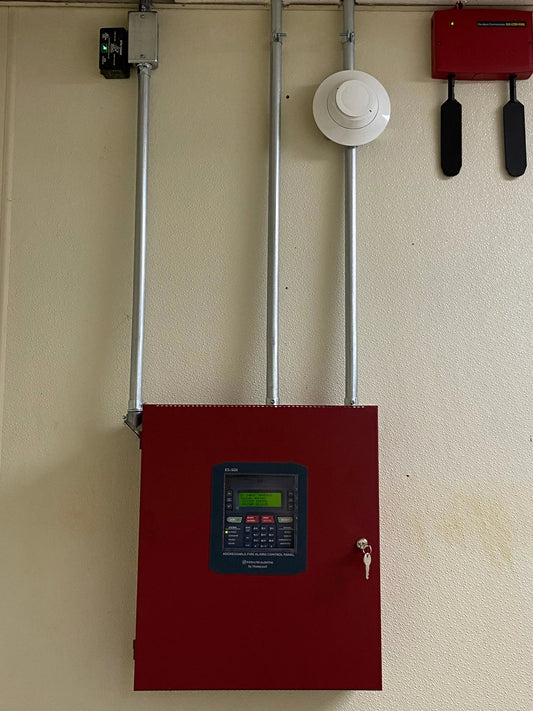
Review the control unit, power, initiating devices, notification appliances and applicable emergency interfaces within the inspection scope.

Monitoring signal verification

Test installed communication paths and verify receipt of the applicable signals at the supervising station.

Reports & applicable labels

Receive inspection results, device documentation and identified deficiencies, with labeling required for the work performed.

Corrective work & follow-up

Use the documented findings to plan deficiency correction and any required follow-up with the Authority Having Jurisdiction.

Code Basis & Compliance

  • NFPA 72 – Chapter 14 (Inspection, Testing & Maintenance): establishes required ITM procedures and frequencies for fire alarm systems and components.
  • Texas 28 TAC §34.600 (Fire Alarm Rules): defines licensing, labeling, and documentation standards (e.g., Inspection/Test Labels after service).
  • Local AHJ: adoption/enforcement via IFC/IBC and local ordinances; AHJ-specific forms or intervals may apply.

Annual Inspection & Testing – What's Included

  • Control unit(s), power supplies, batteries (load test/voltage), and trouble/supervisory functions
  • Initiating devices: smoke/heat detectors, manual pull stations, waterflow/tampers, duct detectors
  • Notification appliances: horns, strobes, speakers, visible/voice systems and audibility/visibility verification
  • Emergency functions: elevator recall/smoke control interfaces, door release/shunt trip, HVAC shutdown
  • Off-site monitoring: communicator path test (dual-path if installed), signal receipt verification
  • Panel programming review (time/date, event history), SLC loop/device mapping spot-checks
  • Kitchen hood interconnects and other mandated supervisory interfaces (where applicable)

Deliverables You Receive

  • Inspection/Test Label (TDI – 28 TAC §34.622): applied after testing with system status and details.
  • AHJ-ready test report: device list with results, corrective actions, and deficiencies (if any).
  • Deficiency tagging guidance: Yellow/Red tagging per AHJ/TDI practice when hazards or impairments exist.
  • Documentation updates: record of completion (as needed) and recommendations to maintain compliance.

Licensed testing and inspection frequencies

Inspections and testing must be performed by a Texas-licensed fire alarm firm with licensed personnel under 28 TAC §34.600 and Texas Insurance Code Chapter 6002. We coordinate directly with your AHJ to meet local submittal and labeling rules.

Frequency: While component frequencies vary (e.g., quarterly/semiannual for some devices), most AHJs require a comprehensive annual inspection & functional test of the system per NFPA 72 Chapter 14. Always follow your AHJ's adopted edition and directives.

Inspection scheduling

Send the property address, panel model, approximate device count and any recent inspection or deficiency reports. Include building access requirements and your preferred scheduling window so we can define the inspection scope and coordinate around your operations.

Review complete commercial fire alarm services.

Frequently asked question

How long does an annual test take?
Depends on building size and device count; a small office may take hours, multi-story facilities can take a full day or more. We schedule around your operations.

Contact form