Integrating DSC PowerSeries Neo With Commercial Access Control
A DSC PowerSeries Neo burglar alarm can be coordinated with a commercial access-control system so an authorized credential event performs a defined alarm action. When designed correctly, this can reduce false alarms, simplify opening procedures, and create a clearer operating sequence for employees.
The integration should be engineered around the building's partitions, schedules, credentials, event history, and emergency procedures. A generic door-unlock relay should not automatically disarm an entire facility without appropriate authorization and testing.
What the Integration Can Do
Depending on the equipment and approved sequence, access control may be used to:
- Disarm a designated burglar-alarm partition after an authorized credential is accepted
- Prevent ordinary door access from disarming restricted areas
- Coordinate employee opening and closing schedules
- Generate an auditable record of the credential and access event
- Reduce false alarms caused by employees entering before manually disarming
- Notify management when access occurs outside an approved schedule
Credential-Based Disarming Must Be Deliberate
Not every valid card, PIN, or mobile credential should disarm the burglar alarm. The access-control system should identify which users, doors, schedules, and partitions are authorized for that action.
For example, an employee credential may unlock an exterior door while only a manager credential is permitted to disarm the associated alarm partition. This preserves security while making the opening process easier for authorized personnel.
Relay and Input Coordination
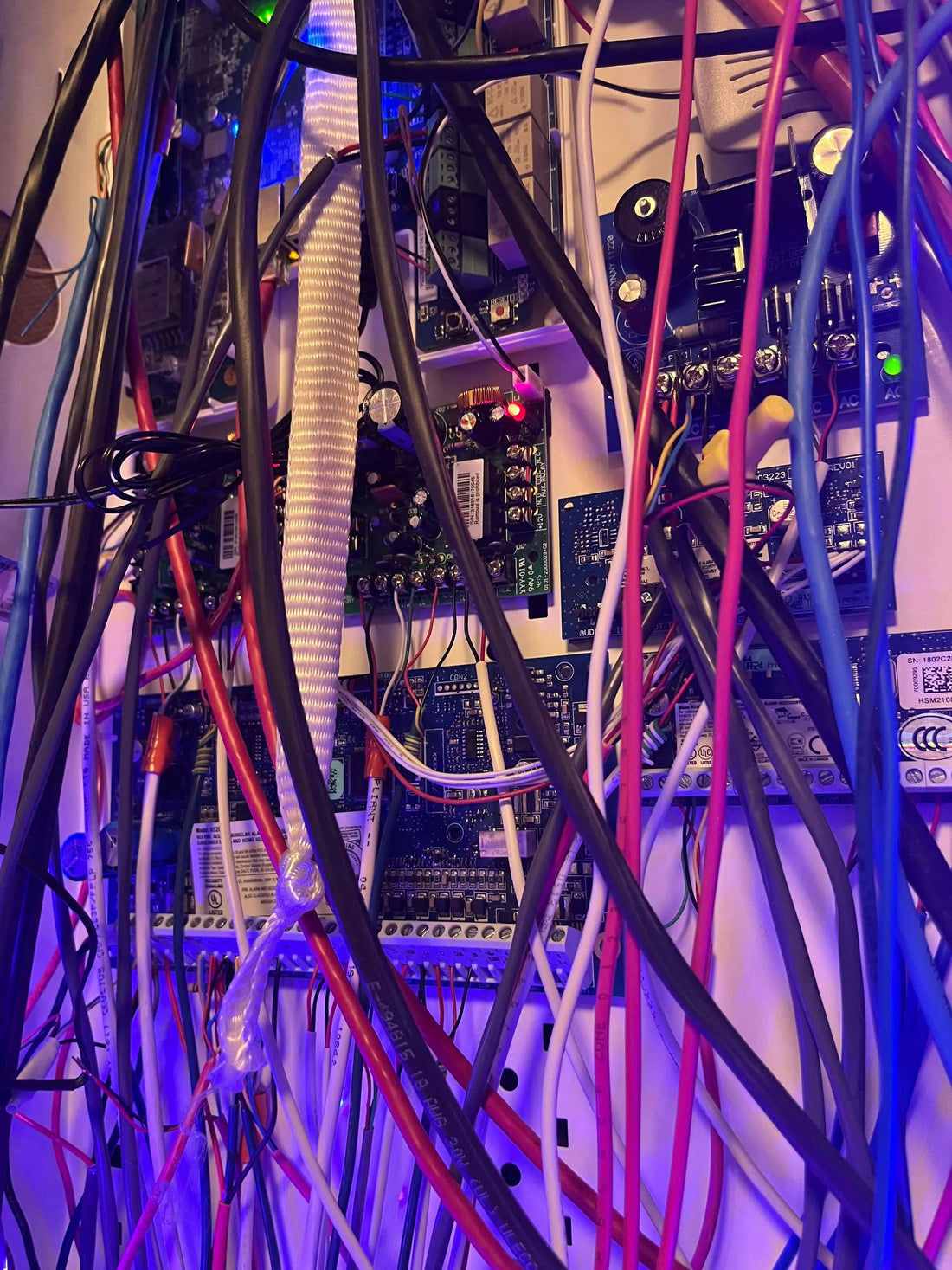
A typical hardwired integration uses a programmed relay output from the access-control system and a compatible, programmed input on the burglar-alarm system. The exact wiring, supervision, zone definition, pulse duration, and partition behavior depend on the selected panels and the approved sequence of operation.
The relay should not be treated as a substitute for proper user authorization. The design should also prevent an access-control failure, wiring short, or uncontrolled relay state from silently leaving the building disarmed.
Preserve the Audit Trail
Good integration should make it possible to determine:
- Which credential was used
- Which door accepted the credential
- When the alarm partition changed state
- Whether the event occurred inside or outside the approved schedule
- Whether the door was forced or propped open afterward
Cloud-managed access control such as Brivo can provide credential, door, and schedule history. Alarm.com-compatible DSC Neo monitoring can provide alarm-system events and interactive control. The final design should make those records understandable rather than creating unexplained automated events.
Access Control Should Not Compromise Egress
Burglar-alarm integration is separate from safe door operation. Commercial doors must still use appropriate locking hardware, allow required egress, and comply with the approved access-control and fire-safety design.
Avenger Security generally favors fail-secure electric strikes, electrified locksets, or motorized latch-retraction hardware for standard commercial doors. Door-position monitoring should report forced and propped conditions. A request-to-exit device should be used for monitoring and sequence control where appropriate—not as a substitute for safe mechanical egress.
Keep Fire Alarm Functions Separate
This type of integration concerns the burglar-alarm system. Fire alarm reporting, sprinkler supervision, controlled-egress release, and other life-safety functions require their own approved design and testing. An access credential must never bypass or disable required fire alarm protection.
Professional Design and Commissioning
Avenger Security can evaluate the DSC Neo panel, access-control platform, door hardware, partitions, schedules, and monitoring requirements. The final commissioning test should confirm authorized and unauthorized credential behavior, alarm state changes, central-station reporting, door alarms, loss-of-power behavior, and event history.
New-service consultation: New clients considering new services receive an on-site visit and up to one hour of consultation at no cost. Troubleshooting, diagnostics, repairs and other technical service on existing systems are billed at standard service rates; when applicable, the standard on-site service visit is $195.